What is the best way to track resistance band workouts?
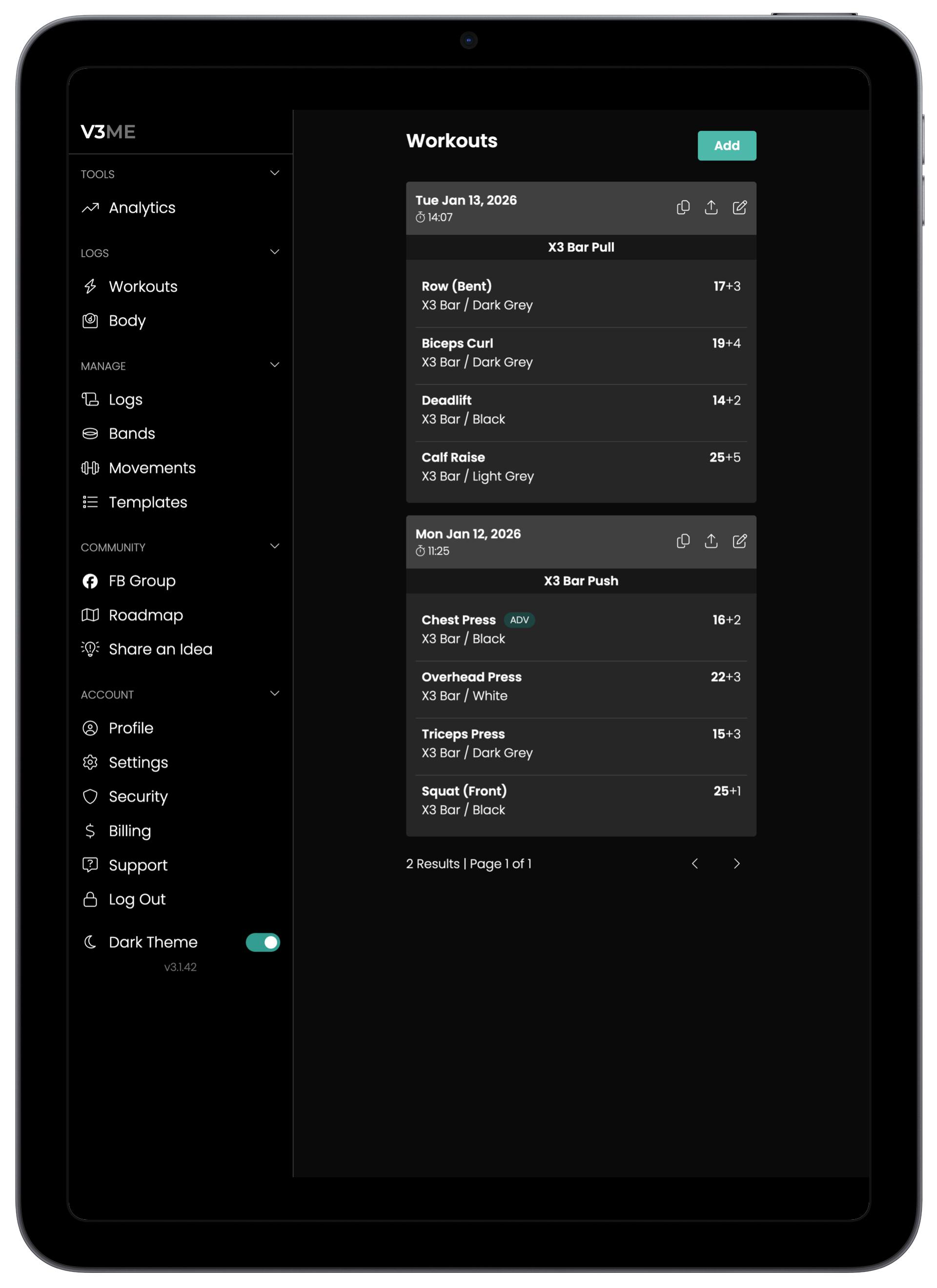
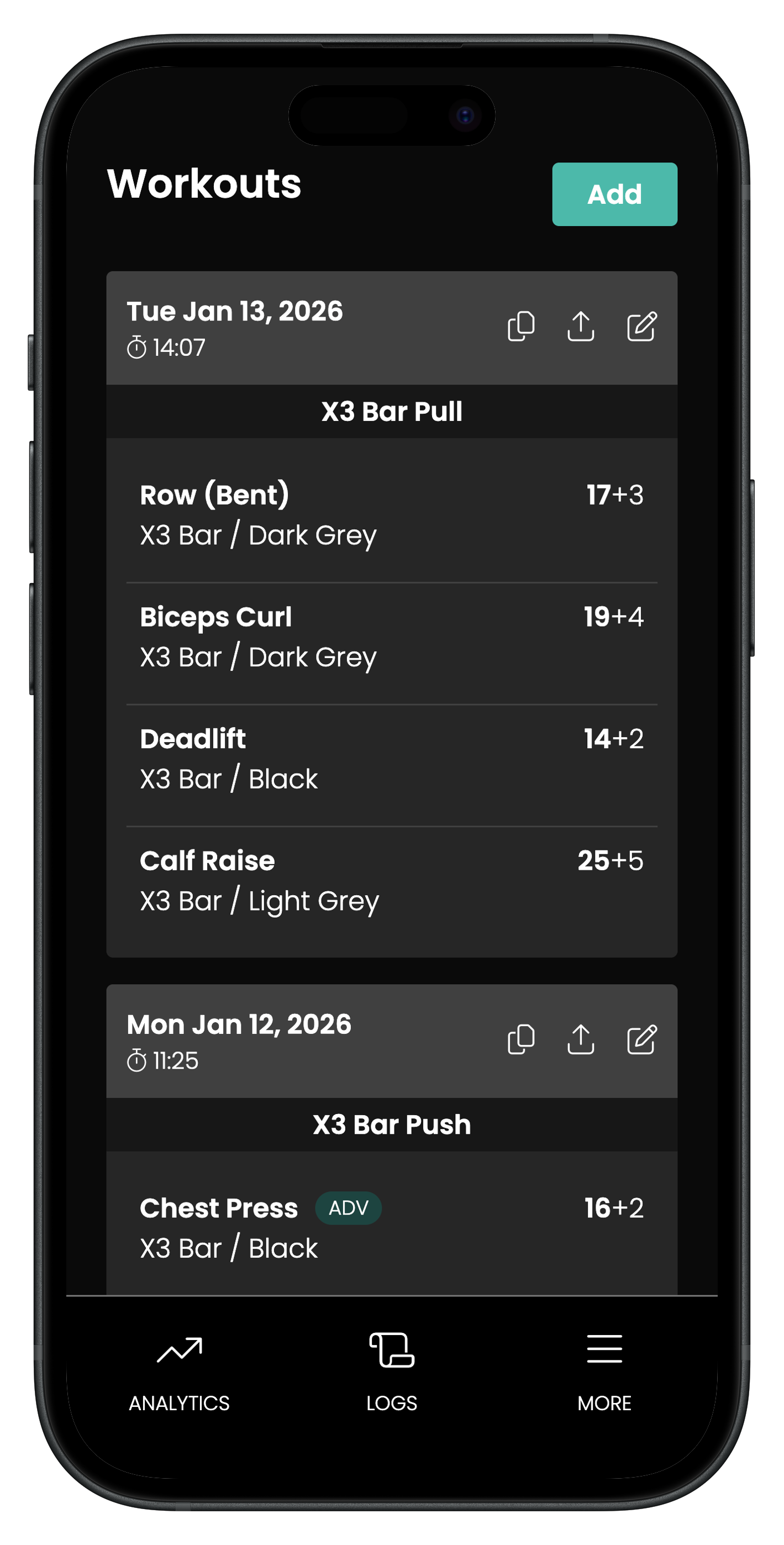
A good resistance band workout tracker should record the movement, band selection, reps or time, effort, notes, and workout history. V3ME is built around those band-specific details.
Bands do not behave like dumbbells, and your tracker should not pretend they do. V3ME keeps setup, effort, and history close so each session is easier to repeat and improve.
Most fitness logs treat bands as an afterthought. V3ME keeps the details that drive your next decision visible, so your log stays useful after the workout ends.
Record the exact band setup, reps, timed work, effort, and notes without translating everything into gym-machine language.
Turn repeatable routines into templates so you can start training quickly instead of rebuilding the workout every time.
See what you did last time before you choose the next band, rep target, or variation.
Keep progress photos and body metrics near the workouts that produced the change.
A good resistance band workout tracker should disappear while you train and become useful again when you are deciding what to do next.
Open a saved routine or start a fresh band workout.
Log the movement, band setup, reps or time, and how the set actually felt.
Add notes or photos when context matters.
Use recent history to make the next workout a little more intentional.
Direct answers for people deciding whether V3ME fits the way they train.
A good resistance band workout tracker should record the movement, band selection, reps or time, effort, notes, and workout history. V3ME is built around those band-specific details.
Yes. V3ME can track timed movements and effort-based work, which is useful for holds, conditioning, mobility, and other non-repetition exercises.
Yes. V3ME supports custom workouts, movements, bands, and templates so you can track your own resistance band routine.
Create workout templates, track bands, and keep your training history in one place.